
Varalakshmi Vratham 2026
Varalakshmi Vratham is one of the most auspicious observances for married women in South India — celebrated on the Friday before the full moon (Purnima) of the Sravana month to worship Goddess Varalakshmi, the bestower of all boons. In 2026, it falls on Friday, August 28. The auspicious puja muhurat is 06:00 AM to 09:00 AM IST — the Brahma Muhurat and Pratah Kaal window is considered the most potent time for Varalakshmi Kalasha Puja.
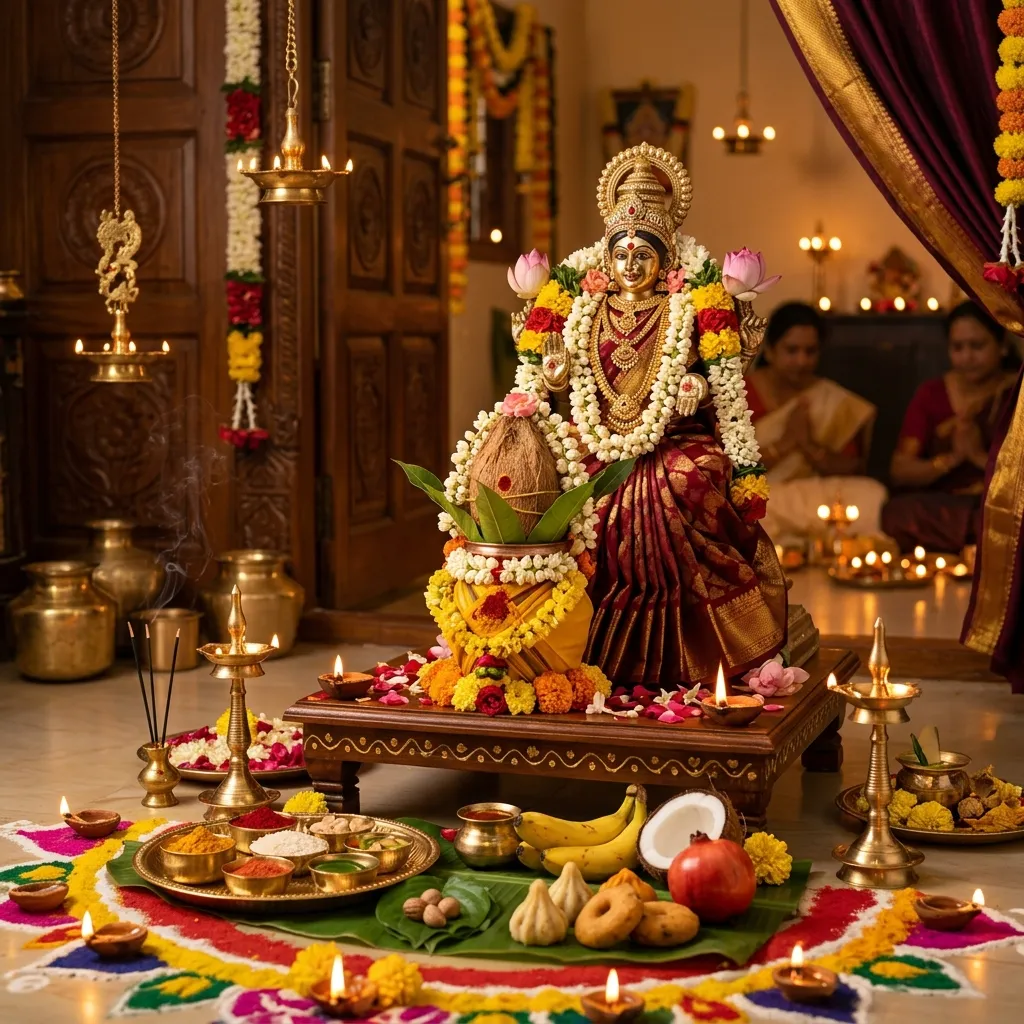
Varalakshmi Vratham 2026 — Exact Tithi & Muhurat
The Sravana Shukla Dvadashi Tithi and the auspicious puja window (IST):
⭐ Why the Morning Muhurat Is Most Potent
The pre-dawn to morning window on Varalakshmi Vratham corresponds with Brahma Muhurat and Pratah Kaal — when Goddess Lakshmi is said to traverse the earth bestowing blessings on her devotees. The Sri Sukta from the Rig Veda describes Lakshmi as one who rises with the dawn like a golden sun. Performing Kalasha Sthapana and Shodasopachara Puja within the 06:00–09:00 AM IST window is considered equivalent to performing the puja on all 8 Ashta Lakshmi temples simultaneously, according to Karnataka tradition.
The Deep Significance of Varalakshmi Vratham
Why Varalakshmi Vratham is considered the most powerful Lakshmi puja of the year — mythological, astrological, and cultural dimensions.
Varalakshmi in Vedic Tradition
The name Varalakshmi is derived from two Sanskrit words: Vara (boon/wish) and Lakshmi (the goddess of wealth and prosperity). She is thus the Lakshmi who grants all boons. The Skanda Purana records how Lord Shiva himself instructed Parvati to observe this Vrata during the Sravana month, declaring it equivalent in merit to worshipping all eight forms of Lakshmi simultaneously. The vratham tradition originates in the story of Charumathi of Magadha, a devoted woman blessed by Varalakshmi with all the eight forms of prosperity.
Sravana Month & Cosmic Timing
Varalakshmi Vratham falls in Sravana — the holiest month in the Hindu calendar, ruled by the moon and dedicated to Lord Vishnu. This month is when cosmic energies are at their most powerful for Lakshmi worship. The Friday before Purnima combines the auspiciousness of Shukla Paksha (waxing moon), the Shukravara (Friday — the day of Venus/Shukra, ruler of Lakshmi), and the Dvadashi tithi — creating a triple confluence of Lakshmi energy found nowhere else in the calendar.
Sumangali Puja & Women's Power
Varalakshmi Vratham is primarily observed by Sumangalis (married women) for the health, prosperity, and longevity of their husbands and families. The Vrata includes inviting other married women to the puja and gifting them Sumangali items — a powerful ritual of collective feminine energy and community bonding. Widows do not observe this Vrata in traditional practice. Unmarried women may observe it as a Vrata to attract an auspicious marriage and a prosperous married life, as Varalakshmi blesses devotees with all 8 forms of prosperity.
Why We Celebrate Varalakshmi Vratham — Its Deep Significance
From the blessing of Charumathi to the science of Venus cycles, Varalakshmi Vratham is a masterpiece of spiritual timing.
📖 The Story of Charumathi — The First Devotee
The origin of Varalakshmi Vratham is recorded in the Skanda Purana. In the kingdom of Magadha, there lived a devoted woman named Charumathi, whose purity of heart, devotion to her husband, and service to guests were extraordinary. Pleased by her devotion, Goddess Varalakshmi appeared in her dream on the Sravana Shukla Friday and instructed her to observe the Vrata on that day. Charumathi performed the puja meticulously, and Goddess Varalakshmi blessed her with all eight forms of prosperity — wealth, grain, courage, children, knowledge, victory, divine grace, and royal power. Hearing of her blessings, other women of Magadha also began observing the Vrata, and the tradition spread across South India.
🪐 Astrological Basis — Venus, Moon & the Kalasha
In Vedic astrology, Lakshmi is the presiding goddess of Venus (Shukra). Friday (Shukravara) is Venus's day. The Sravana full moon (Purnima) amplifies lunar energy, which governs abundance, fluids, and nourishment. Performing Varalakshmi Puja on the Friday before this powerful Purnima creates a cosmic circuit: Venus energy (beauty, prosperity, love) + Waxing Moon energy (growth, abundance) + Dvadashi tithi (completion, fulfillment). The sacred Kalasha itself is a representation of the cosmic womb — the copper vessel filled with water symbolizes the primordial ocean from which Lakshmi emerged during the Samudra Manthan (Churning of the Cosmic Ocean).
🌺 Regional Traditions Across South India
Varalakshmi Vratham is most prominently observed in Karnataka, Tamil Nadu, Andhra Pradesh, and Telangana. In Karnataka, it is called Varalakshmi Habba and married women wear new silk sarees and gold jewelry. In Tamil Nadu, elaborate Kolu (doll arrangements) are sometimes displayed. Across Andhra and Telangana, the tradition of inviting 16 Sumangalis (Shodasha Sumangali Puja) is central to the observance. The Varalakshmi Mukhavada (a golden face-mask of the Devi) placed atop the Kalasha is the most iconic image of this festival.
The 8 Ashta Lakshmi Forms Worshipped Today
Varalakshmi Vratham is said to be equal in merit to worshipping all 8 Ashta Lakshmis simultaneously. Explore each divine form and her unique blessings.
Adi Lakshmi
Aspect: Primordial GoddessThe original, primordial form of Lakshmi who accompanies Lord Vishnu. She represents infinite divine energy and the source of all creation.
Primordial blessings, moksha, divine grace
Om Adi Lakshmyai Namah
Chant 21 or 108 times during puja
Step-by-Step Varalakshmi Puja Vidhi
The core Varalakshmi Puja must be completed within the auspicious muhurat window (06:00–09:00 AM IST on August 28, 2026). Follow these sequential steps:
- 1
Pre-Dawn Snanam & Sankalpa (Resolve)
Wake before 05:30 AM. Take a purifying bath with sesame oil (Nalla Ennai) — a traditional pre-puja practice in South India. Wear new silk attire (preferably gold, red, or green) and new glass bangles. Sit facing east and take a Sankalpa: "I worship Goddess Varalakshmi today for the prosperity, health, and long life of my husband and family, and for the fulfillment of all righteous wishes."
- 2
Kalasha Sthapana — Setting Up the Sacred Vessel
Fill a new copper or brass pot (Kalasha) with water, a gold coin, a silver coin, turmeric-coated coconut, mango leaves (5 or 7), and Pancha Ratna (5 gems or rice grains representing gems). Place this Kalasha on raw rice in a decorated plate. Fix the Varalakshmi Mukhavada (golden face mask of the Devi) on the coconut. Dress the Kalasha with a silk saree or cloth. This Kalasha IS Goddess Varalakshmi — treat it as her divine presence.
- 3
Ganapati Puja (Mandatory First Step)
Before beginning the Varalakshmi Puja, invoke Lord Ganesha by placing a small Ganesha idol or drawing beside the Kalasha. Offer modakam, red flowers, and perform a short Ganesha Puja. Without Ganesha's invocation, traditional South Indian puja rituals are considered incomplete.
- 4
Shodasopachara Puja — 16-Step Worship
Offer the 16 ritual services to Varalakshmi: Asana (seat), Padyam (water for feet), Arghyam (water for hands), Achamaniyam (water for mouth), Snanam (bath with Panchamrit), Vastram (silk cloth), Yajnopavitam (sacred thread), Gandha (sandalwood), Pushpa (flowers — jasmine is mandatory), Dhupam (incense), Dipam (lamp), Naivedyam (food offering — Sakkarai Pongal), Tambulam (betel leaves), Suvarnapushpa (gold flower), Nirajana (camphor Aarti), and Pradakshina (circumambulation).
- 5
Varalakshmi Katha Shravan (Reading the Sacred Story)
Read or listen to the Varalakshmi Vrat Katha — the story of Charumathi from the Skanda Purana. This is considered mandatory for the Vrata to be complete and effective. The Katha is widely available in Kannada, Telugu, and Tamil. Many families invite a priest to recite it. After the Katha, perform Mangalarati (camphor lamp waving) while the family sings Lakshmi Aarti or Varalakshmi Suprabhatam.
- 6
Sumangali Puja — Honoring Married Women
Invite at least one (ideally 9 or 16) married women (Sumangalis) to the puja. Seat them with honor, wash their feet with turmeric water, and gift each a Sumangali Thattu (a plate with new saree or blouse piece, kumkum, turmeric, glass bangles, jasmine, coconut, betel, and cash Dakshina). This act of honoring living representations of Goddess Lakshmi is considered central to the Vrata's merit.
- 7
Yellow Thread Tying — Kankana Dhara
The Varalakshmi Mukhavada is tied with a sacred yellow thread (Kankana / Maangalyam). After completing the puja, the observing woman ties this thread (or a thread blessed by the priest during puja) around her right wrist. This thread is worn for 1 year and is considered a Raksha (protection). Some traditions involve tying the thread on the husband's right wrist as well as a blessing for his longevity.
- 8
Fast-Breaking (Parana) — After Full Puja
The fast is broken after completing all puja steps and distributing Prasad to all guests. Traditional Prasad includes Sakkarai Pongal, Sundal (various legumes), Kozhukattai, and fruits. The household then partakes in a full festive meal. Evening includes another brief Aarti at sunset. The Kalasha water is sprinkled throughout the house as a blessing.
Fasting Rules & Taboos
water_drop1. Phalahar or Nirjala Vrat
Most married women observe a full-day fast from sunrise to the completion of the puja (morning) or until sunset. The traditional fast is Phalahar (fruits, milk, and dairy only) or Nirjala (no food or water). The fast is maintained with strict devotion — even applying eye makeup is considered by some traditional women as an act of beauty for the Devi.
no_meals2. No Regular Cooking Before Puja
No regular household cooking should begin before the Varalakshmi Puja Naivedyam is offered. The Sakkarai Pongal and other Naivedyam items are the FIRST food cooked in the home that day. Cooking begins after the Kalasha Sthapana. The Naivedyam is offered to the Devi before any family member tastes any food.
grass3. Silk Attire is Mandatory
Wearing silk (Pattu Saree) and fresh flowers in the hair (especially jasmine) is traditional and considered respectful to Varalakshmi. Cotton or synthetic is not preferred on this day. All women in the household are expected to wear new or washed silk attire. Gold jewelry is worn as an expression of Lakshmi's presence in the home.
block4. Forbidden Activities
Avoid borrowing money, lending money, or any financial disputes on this day — it is considered inauspicious to disturb Lakshmi's flow. Do not sweep or clean vigorously before or during puja. Do not discard flowers from the Kalasha or puja area until the next morning. Avoid argument, harsh speech, and negative emotions throughout the day.
Varalakshmi Puja Samagri Checklist
Collect these items the day before (Aug 27) to ensure a smooth, uninterrupted morning puja on August 28.
| Category | Required Items |
|---|---|
| Varalakshmi Idol / Kalasha | Silver, brass, or clay Varalakshmi idol, OR a sacred Kalasha (copper or brass pot) with water, a coconut adorned with turmeric paste (Mangalyam), and mango leaves — this Kalasha IS Varalakshmi in the traditional rite. A Varalakshmi face-plate (Mukhavada) placed on the Kalasha is the most common form in Karnataka and Tamil Nadu. |
| Flowers & Garlands | Jasmine garlands (Mallige / Mullai — mandatory), marigold garlands in gold/orange, lotus flowers, rose petals, Tulsi leaves, mango leaves for the Kalasha, Ashoka or banana leaves for the base, and Kanakambara (orange flowers) if available. |
| Puja Offerings | Turmeric (Haldi), kumkum (Vermilion/Sindoor), sandalwood paste (Chandan), incense sticks (Agarbatti — jasmine or rose preferred), pure ghee lamp (Aarti diya or Kuthu Vilakku), camphor (Kapur), and a conch shell (Shankh) for blowing. |
| Bhog & Naivedyam | Sakkarai Pongal (sweet rice pudding — the traditional South Indian Naivedyam), Modakam, Sundal (boiled chickpeas seasoned with coconut), Kozhukattai, coconut, banana, betel leaves with areca nut, and seasonal fruits. Each offering is placed on a banana leaf. |
| Mangal Sutra Items | Yellow thread (Kankana Dhara / Maangalya Sutra), new silk cloth (Pattu Vastram) for the Devi, glass bangles (Valayal) in gold/green, and a small mirror (Aadarsha) — representing the Devi's adornment and beauty. |
| Ritual Items | A new brass or copper Kalasha, a small square wooden plank (Peetham) or rangoli platform, rice for the base (Akshata), panchamrit (milk, curd, honey, ghee, sugar), rosewater (Gulab Jal), and a gold or silver coin to place in the Kalasha. |
| Donation Items | A new saree (preferably silk) and blouse for gifting to a Sumangali (married woman), kumkum and turmeric set, glass bangles, betel leaves, coconut, and cash offering (Dakshina) to the priest or a married woman invited for Sumangali puja. |
Time Until Puja Muhurat Opens
Counting down to 06:00 AM IST, August 28, 2026 — the start of the auspicious Varalakshmi Puja window.
📋 Muhurat Summary — August 28, 2026
Zodiac-Wise Varalakshmi Blessings & Remedies
Select your Rashi to get personalized Varalakshmi Vratham blessings, the relevant Ashta Lakshmi form, and specific remedies for your zodiac sign.
Taurus — Vrishabha (वृषभ)
Ruling Planet: Venus (Shukra)Taurus is Venus-ruled — the natural sign of Lakshmi. Varalakshmi Vratham is supremely auspicious for Taurus natives. Dhana Lakshmi's blessings manifest as material abundance and financial stability.
Om Dhana Lakshmyai Namah
Chant 108 times during morning puja
Offer white flowers and silver coin to the Kalasha. Prepare Sakkarai Pongal as Naivedyam. Wear new silk or gold jewelry today.
Powerful Varalakshmi Mantras
These mantras carry extraordinary prosperity-invoking power when chanted during the morning muhurat on Varalakshmi Vratham.
Sri Sukta — The Vedic Hymn of Lakshmi
Om Hiranyavarnam Harinim
SuvarnaRajatasrajam
Chandraam Hiranmayim Lakshmim
Jatavedo Ma Avaha
"O Lakshmi, golden-complexioned, wearing garlands of gold and silver, radiant as the moon, golden-formed — O Agni (Jatavedo), bring her to me."
The most ancient Lakshmi mantra from the Rig Veda. Reciting the full Sri Sukta (16 verses) on Varalakshmi Vratham is considered the highest form of worship.
Ashta Lakshmi Stotram (Opening Verse)
Adi Lakshmi Namastubhyam
Dhana Lakshmi Namostute
Dhanya Lakshmi Namastubhyam
Gaja Lakshmi Namostute
"Salutations to Adi Lakshmi, Dhana Lakshmi, Dhanya Lakshmi, and Gaja Lakshmi — all 8 forms of the divine Goddess Lakshmi."
Chant before beginning the Shodashopachara Puja to invoke all 8 forms of Lakshmi simultaneously.
Varalakshmi Ashtakam (Blessing Mantra)
Om Vara Lakshmyai Namah
Sarva Mangala Karinyai
Sarva Sampada Pradayinyai
Sarva Shubha Pradayinyai
"Salutations to Goddess Varalakshmi, the one who brings all auspiciousness, who bestows all wealth and prosperity, and who grants all goodness."
The primary mantra for Varalakshmi Vratham. Chant 108 times while tying the sacred yellow thread. Also chant during the Shodasopachara Puja.
Mahalakshmi Ashtakam (For All-Round Prosperity)
Namastestu Mahamaye
Sri Peete Sura Pujite
Shanka Chakra Gada Haste
Mahalakshmi Namostute
"Salutations to the great illusion (Maya), worshipped at the divine seat (Sri Peetha) by the gods, bearing conch, disc, and mace — salutations to Mahalakshmi."
For overall prosperity, protection of the household, and removal of financial obstacles. Chant 21 times after completing the main puja.
Frequently Asked Questions — Varalakshmi Vratham 2026
When is Varalakshmi Vratham in 2026?expand_more
Varalakshmi Vratham 2026 is on Friday, August 28, 2026 — the Friday before the Sravana Purnima (Full Moon). The Dvadashi Tithi begins at 07:40 AM on August 28 and ends at 09:32 AM on August 29. The auspicious puja muhurat is 06:00 AM to 09:00 AM IST on August 28.
Who should observe Varalakshmi Vratham?expand_more
Varalakshmi Vratham is traditionally observed by married women (Sumangalis) for the prosperity, health, and long life of their husbands and families. Unmarried women may also observe it to receive blessings for an auspicious marriage. In modern practice, the Vrata is observed by anyone seeking Goddess Lakshmi's blessings for prosperity and well-being.
Is Varalakshmi Vratham equivalent to worshipping all 8 Ashta Lakshmis?expand_more
Yes. The Skanda Purana explicitly states that worshipping Varalakshmi on this sacred Friday of the Sravana month is equal in merit to worshipping all 8 Ashta Lakshmi forms simultaneously. This is the primary reason the Vrata is considered so supremely auspicious — it compresses the blessings of an entire year's worth of Lakshmi worship into a single day.
What is the Varalakshmi Mukhavada and why is it important?expand_more
The Varalakshmi Mukhavada is a decorative face-mask of Goddess Varalakshmi, typically made of gold, silver, or brass with ornate decorations. It is placed atop the sacred Kalasha (pot) to represent the presence of the Goddess during the puja. This Mukhavada is the most iconic element of Varalakshmi Vratham, especially in Karnataka and Tamil Nadu. The Kalasha with the Mukhavada IS Varalakshmi — not just a symbol.
What is the significance of the yellow thread in Varalakshmi Vratham?expand_more
The yellow thread (Kankana / Maangalyam Sutra) tied during Varalakshmi Vratham is a Raksha (protection) blessed by the Goddess. After the puja, it is tied around the right wrist of the observing woman (and sometimes the husband's right wrist). This thread is worn for the entire year until the next Varalakshmi Vratham and is believed to carry the protective blessings of Varalakshmi throughout the year. It represents the eternal bond between devotee and Devi.
Can Varalakshmi Vratham be performed at home without a priest?expand_more
Absolutely. Varalakshmi Vratham is primarily a home-based women's festival, and its power comes from the genuine devotion of the observing woman, not from priestly ritual alone. Many families perform it entirely by themselves using the Vrata Katha book. However, for those who want a complete Shodashopachara Puja with Vedic chanting, inviting a priest who knows the Varalakshmi Puja procedure is recommended. The key elements — Kalasha Sthapana, Naivedyam, Katha Shravan, and Sumangali Puja — are non-negotiable for the Vrata to be considered complete.
What Naivedyam (food offering) is traditional for Varalakshmi Vratham?expand_more
The traditional Naivedyam for Varalakshmi Vratham varies by region: In Karnataka, Sakkarai Pongal (sweet rice pudding) and Kobbari Mithai (coconut sweets) are standard. In Tamil Nadu, Sakkarai Pongal, Kozhukattai (modak-style dumplings), and Sundal (boiled spiced lentils) are central. In Andhra/Telangana, Pongali (sweet rice) and Vadapappu (soaked lentils) are traditional. Across all regions, coconut, banana, betel leaves, and fruits are universal Naivedyam items. The Naivedyam must be the FIRST food of the day, offered to the Devi before any family member eats.
Explore Other Sacred Pujas & Festivals
Continue your spiritual journey with detailed guides to other sacred observances in 2026.