
Nag Panchami 2026
Nag Panchami is one of the most ancient festivals in Sanatana Dharma — celebrated on the fifth day (Panchami) of the bright fortnight of Shravana to worship the sacred serpent deities (Naga Devatas). In 2026, it falls on Monday, August 17. The auspicious puja muhurat is 05:50 AM to 08:30 AM IST — the pre-dawn to morning window is considered the most potent time for Nag Abhishek and Nag Puja.
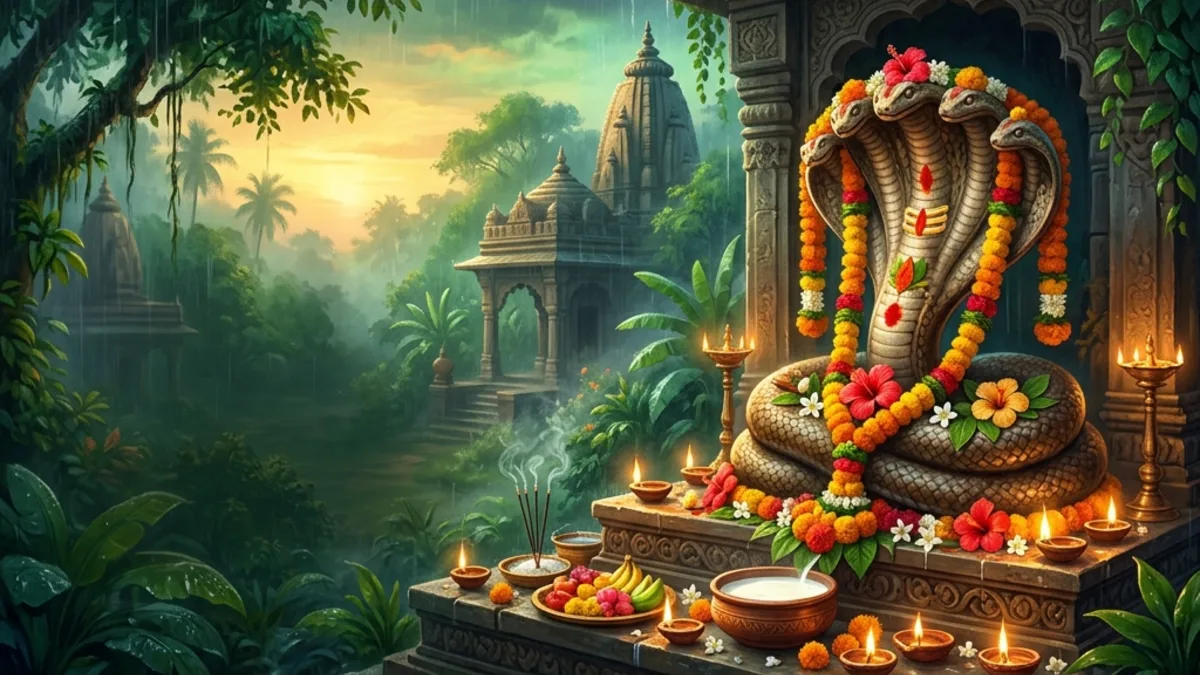
Nag Panchami 2026 — Exact Tithi & Muhurat
The Shravana Shukla Panchami Tithi and the auspicious puja window (IST):
⭐ Why the Morning Muhurat Is Most Potent
The pre-dawn to morning window on Nag Panchami corresponds with Brahma Muhurat and the Pratah Kaal — when serpent deities are believed to be most spiritually accessible. Offering raw milk (Kachcha Doodh) to a Nag idol or natural anthill (Valmik) during this window is considered the equivalent of performing 1,000 acts of charity, according to the Skanda Purana. The 05:50–08:30 AM IST window is the Abhijit Muhurat equivalent for Nag Puja — complete your core puja within this timeframe for maximum benefit.
The Deep Significance of Nag Panchami
Why the serpent is sacred — mythological, astrological, and ecological dimensions.
The Naga in Vedic Cosmology
In Vedic cosmology, Adi Shesha (Ananta) forms the cosmic bed on which Lord Vishnu rests in the primordial ocean of creation. Vasuki encircles Lord Shiva's neck as divine adornment, and the Naga serves as the churning rope during the Samudra Manthan (Ocean of Milk churning). The serpent in Hindu tradition represents eternity, transformation, kundalini energy, time (Kala), and the cycle of rebirth — making Nag Panchami a cosmic festival of regeneration.
The Monsoon Connection
Nag Panchami falls in the heart of the Shravana monsoon month, when serpents emerge from their flooded underground burrows to the Earth's surface. Ancient agrarian communities worshipped snakes as protectors of crops, grain stores, and underground water sources. The monsoon serpent worship tradition predates the Vedic period and was later integrated into the Puranic festival system as Nag Panchami — a brilliant merging of ecological awareness with spiritual practice.
Kaal Sarp Dosh & Rahu-Ketu
In Vedic astrology, the Naga principle is associated with Rahu and Ketu — the shadow planets (lunar nodes) that cause eclipses and create the dreaded Kaal Sarp Dosh when all planets fall between them. Nag Panchami is the most powerful annual day to perform remedies for Kaal Sarp Dosh, Sarpa Dosha, and Rahu-Ketu afflictions. Worship performed today is said to neutralize the negative karmic effects of serpent-related past-life actions.
Why We Celebrate Nag Panchami & Its Deep Human Significance
From mythological victories to ecological harmony, Nag Panchami is a sacred reminder of how humanity can transcend fear and embrace the cosmic flow.
📖 Mythological Foundations: Krishna, Kaliya & King Janamejaya
The primary mythological roots of Nag Panchami are recorded in the Mahabharata and Bhagavata Purana. One major event is Kaliya Mardan, where Lord Krishna defeated and danced upon the hoods of the venomous serpent Kaliya to purify the Yamuna river, eventually sparing Kaliya and sending him away. Another key story is the Sarpa Satra Yagnaof King Janamejaya, who sought to exterminate all serpents to avenge his father King Parikshit's death by the snake Takshaka. On Shravana Shukla Panchami, the young sage Astika intervened and stopped the yajna, saving the snake race. Devotees celebrate this day to commemorate the salvation of the snakes and the restoration of natural peace.
🛡️ Transcending Fear: Conquering the Shadow Within
Serpents have universally symbolized the primal human fear of death, poison, and the unknown. In Hindu psychology, worshipping Nag Devta is a process of **confronting and neutralizing our deepest fears**. By offering milk to the snake (representing nourishment and pacification), we transform our relationship with fear into one of reverence. Astrologically, this corresponds to pacifying Rahu and Ketu, the shadow nodes that cause mental illusions, anxiety, and obsessive behaviors.
🍃 Ecological & Agrarian Relevance
For agricultural communities, snakes are not pests but crucial allies. They consume rodents that would otherwise destroy crops and grain stores, acting as natural protectors of the harvest. During the monsoon season, when water fills their holes, snakes are forced onto the surface, increasing human-snake encounters. Worshipping them on Nag Panchami was an ancient, highly sophisticated method of fostering co-existence, discouraging the killing of snakes, and promoting ecological balance at a time of high risk.
The 12 Sacred Naga Deities
Each of the 12 principal Naga Devatas rules a distinct domain. Worship the one that aligns with your specific prayer today.
Ananta / Shesha
Associated Deity: Lord VishnuLiberation, eternity, cosmic stability
Om Anantaya Namah
Chant 21 or 108 times during puja
Step-by-Step Nag Puja Vidhi
The core Nag Panchami puja must be completed within the auspicious muhurat window (05:50–08:30 AM IST on August 17, 2026). Follow these sequential steps:
- 1
Pre-Dawn Snanam & Sankalpa
Wake before 05:30 AM, take a purifying cold bath (on Nag Panchami, bathing before sunrise is considered mandatory for the fast to be valid). Wear clean white or yellow clothing. Sit facing east and take a Sankalpa: "I worship the Naga Devatas today for the protection of myself, my family, and the resolution of all Sarpa Dosha karma."
- 2
Naag Chitran — Drawing the Sacred Serpent
The most traditional practice: On a clean wooden plank, draw the image of a coiled serpent using raw turmeric paste (Haldi) mixed with cow dung or sandalwood paste. In many households, a serpent is also drawn on the wall near the main door. This hand-drawn Naag is considered more meritorious than a purchased idol for home worship.
- 3
Nag Abhishek with Raw Milk
Pour raw, unboiled cow milk (Kachcha Doodh) slowly over the Nag idol or drawn image. This is the central act of Nag Panchami. Chant "Om Namo Bhagavate Vasudeva Naga Rajaya Namah" or "Om Vasukaye Namah" continuously during the Abhishek. Follow with a Panchamrit Abhishek (milk, curd, honey, ghee, sugar).
- 4
Shodashopachara Puja (16 Services)
Offer the 16 ritual services: Asana (seat of kusha grass), flowers (white jasmine preferred), Bilva leaves, Tulsi, Durva grass, incense, lamp, camphor Aarti, Naivedya (Kheer or fruits), sandalwood paste, kumkum tilak on the hood of the Naga idol, and sacred thread (Mouli). Ring the bell continuously during the Aarti.
- 5
Nag Katha Shravan (Listening to the Story)
On Nag Panchami, it is traditional to listen to or read the Nag Panchami Vrat Katha — the story of the farmer's daughter who protected a Nag family and received their blessings. This Katha is found in the Skanda Purana and Bhavishya Purana. Reading it aloud for family members amplifies the protective grace.
- 6
Anthill (Valmik) Worship — Optional but Powerful
If possible, visit a naturally occurring anthill (Valmik) — serpents are believed to reside in them. Pour raw milk carefully at the base of the anthill while chanting the Nag mantra. Do NOT disturb or dig the anthill. Leave flowers and a small offering of milk. This act is considered equal to worshipping at a major Nag temple.
- 7
Fast-Breaking (Parana) — After Sunset
Break the Nag Panchami fast only after sunset on August 17, once you have completed the evening Aarti. The traditional Parana food is Kheer, Batasha (sugar drops), coconut, and fresh seasonal fruits. Distribute prasad generously to neighbors and family. Avoid consuming fried food or food cooked on an open flame for the entire day.
Fasting Rules & Taboos
water_drop1. Nirjala or Phalahar Vrat
Most devotees observe a full-day fast (Nirjala — no water, or Phalahar — fruits and milk only) from sunrise until sunset. The fast is especially observed by married women for the protection of their brothers, and by those seeking remedy for Kaal Sarp Dosh.
no_meals2. No Fire-Cooked Food
In many regional traditions (especially Maharashtra, UP, MP, Rajasthan), no food is cooked on an open flame on Nag Panchami day. All food consumed is either raw, cold-prepared, or made from the previous night's cooking.
grass3. Do Not Dig the Earth
Digging the ground, ploughing, or using sharp tools in the earth is strictly prohibited on Nag Panchami — serpents live underground and disturbing the soil is considered an act of harm against Naga Devatas.
block4. Forbidden Activities
Avoid cutting, chopping, or using knives today. Do not fry food, harm any living creature, or use harsh chemicals in or around the home. Women traditionally avoid sewing and stitching. Avoid consuming non-vegetarian food and alcohol on this day.
Nag Panchami Puja Samagri Checklist
Collect these items the day before (Aug 16) to ensure a smooth, uninterrupted morning puja on August 17.
| Category | Required Items |
|---|---|
| Nag Idol / Image | Clay, silver, or brass Nag Devta idol, or a hand-drawn Nag image on wooden plank using raw turmeric (Haldi) paste — this traditional image is called Naag Chitran and is considered especially meritorious. |
| Flowers & Garlands | White flowers (jasmine, white lotus), marigold garlands in saffron/orange, red hibiscus for Vasuki worship, Bilva leaves (Bel patra), Tulsi leaves, and fresh Durva grass. |
| Puja Offerings | Raw cow milk (Kachcha Doodh — the primary offering), sugarcane juice, honey, curd, flowers, incense sticks (sandalwood fragrance preferred), pure ghee lamp (Diya), and camphor (Kapur). |
| Bhog & Prasad | Panchaamrit, Kheer (rice pudding with milk), Batasha (sugar pellets), coconut, seasonal fruits. Note: No fire-cooked food is prepared on Nag Panchami in many traditions — cold prasad is preferred. |
| Ritual Items | Copper or brass plate (Thali), conch shell (Shankh), copper bell, sacred thread (Mouli / Raksha Sutra) in red and yellow, sandalwood paste, kumkum (vermilion), and turmeric. |
| Donation Items | Raw milk in copper vessel (to pour at a Nag shrine or anthill), black sesame seeds (Kala Til), snake-gourd (Tinda or Tori vegetables), and cash offering for serpent temple maintenance. |
Time Until Puja Muhurat Opens
Counting down to 05:50 AM IST, August 17, 2026 — the start of the auspicious Nag Puja window.
📋 Muhurat Summary — August 17, 2026
Zodiac-Wise Kaal Sarp & Nag Panchami Remedies
Select your Rashi to get personalized Nag Panchami remedies for Rahu-Ketu afflictions and Kaal Sarp Dosh specific to your zodiac sign.
Scorpio — Vrishchika (वृश्चिक)
Ruling Planet: Mars (Mangal)Scorpio is naturally connected to serpent energy (it is ruled by both Mars and Ketu). Nag Panchami is the single most powerful annual puja day for Scorpio natives.
Om Vasukaye Namah
Chant 108 times during morning puja
Full Nag Panchami fast and Shodasopachara puja. Offer red hibiscus flowers and raw milk. Donate dark-coloured grains or sesame oil.
Powerful Nag Panchami Mantras
These mantras carry extraordinary healing and protective power when chanted during the morning muhurat on Nag Panchami.
Nag Gayatri Mantra
Om Nag Kulaya Vidmahe
Vasukaye Dhimahi
Tanno Sarpa Prachodayat
"We meditate on the serpent lineage. We contemplate Vasuki, the great Naga. May that Serpent-power illuminate and inspire us."
Most powerful Nag Panchami mantra. Chant 108 times at sunrise for protection from all serpent-related afflictions.
Ananta Shesha Mantra (Lord Vishnu's Serpent)
Om Anantaya Namah
Ananta Sharire Namah
Ananta Rupaya Namah
"Salutations to the Infinite One (Ananta). Salutations to the form of infinite being. Salutations to the limitless form."
For liberation, moksha, and breaking cycles of suffering. Especially powerful for those with Ketu afflictions.
Vasuki Mantra (Lord Shiva's Naga)
Om Namo Vasukaye
Vishwa Palaya Namah
Sarpa Raja Namah Shivaya
"Salutations to Vasuki, the protector of the universe, the king of all serpents. Salutations to Lord Shiva."
For protection from enemies, poison, fear, and sudden misfortune. Chant 21 times while offering milk.
Kaal Sarp Dosh Nivaran Mantra
Om Hraam Hreem Hraum
Sah Rahave Namah
Om Hraam Hreem Hraum
Sah Ketave Namah
The seed-syllable mantra of Rahu and Ketu. Directly addresses both shadow planets to neutralize Kaal Sarp Dosh effects.
For those with confirmed Kaal Sarp Dosh in the natal chart. Chant 108 times each (Rahu first, then Ketu).
Frequently Asked Questions — Nag Panchami 2026
When is Nag Panchami in 2026?
Nag Panchami 2026 is on Monday, August 17, 2026. The Panchami Tithi begins at 04:52 PM on August 16, 2026, and ends at 05:00 PM on August 17, 2026. The auspicious puja muhurat is 05:50 AM to 08:30 AM IST on August 17.
What is the most important offering on Nag Panchami?
The single most important offering on Nag Panchami is raw, unboiled cow milk (Kachcha Doodh). It must be offered to a Nag idol, a drawn serpent image, or a natural anthill (Valmik) during the morning muhurat. The Skanda Purana describes this act as equivalent to a thousand acts of charity.
Can Nag Panchami cure Kaal Sarp Dosh?
Nag Panchami is considered the single most powerful annual day for performing Kaal Sarp Dosh remedies. Regular worship, especially at Nashik's Trimbakeshwar, Ujjain's Mahakaleshwar, or any Nag Devata temple on this day, significantly mitigates the negative effects of Kaal Sarp Dosh over time. A single day's puja does not permanently remove it, but consistent annual observance creates substantial karmic relief.
Is Nag Panchami 2026 on August 16 or August 17?
The main day of observance is August 17, 2026. Though the Panchami Tithi begins on the evening of August 16, the Uday Tithi (the tithi at sunrise) is Panchami on August 17 — making it the authoritative day for all fasting, puja, and Nag Abhishek rituals.
What should not be done on Nag Panchami?
On Nag Panchami: (1) Do not dig the earth, plough, or use sharp garden tools; (2) Do not cook food on open fire (in many traditions); (3) Do not cut or chop with knives; (4) Do not consume non-vegetarian food or alcohol; (5) Avoid stitching or sewing; (6) Do not kill or harm any snake or reptile; (7) Do not fry food.
Which temples are famous for Nag Panchami puja?
The most famous Nag Panchami temples in India are: (1) Trimbakeshwar Shiva Temple, Nashik (Maharashtra) — center of Kaal Sarp Dosh puja; (2) Nag Vasuki Temple, Prayagraj (UP); (3) Nagathamman Temple, Chennai (Tamil Nadu); (4) Battis Shirala, Maharashtra — famous for live serpent worship; (5) Naga Panchami Temple, Kukke Subramanya, Karnataka.
What is Kaal Sarp Dosh and who has it?
Kaal Sarp Dosh occurs in the birth chart when all 7 main planets (Sun, Moon, Mars, Mercury, Jupiter, Venus, Saturn) are hemmed between Rahu and Ketu (the two lunar nodes). It creates obstacles in career, marriage, and health. It affects approximately 1 in 9 people. Nag Panchami puja, especially at Trimbakeshwar, is the most widely prescribed remedy for this dosh in Vedic astrology.
Check If You Have Kaal Sarp Dosh
Want to know if Kaal Sarp Dosh is present in your birth chart and how it specifically affects your life? Our Vedic astrologers can give you a detailed Kaal Sarp analysis with personalized Nag Panchami remedies tailored to your natal chart.