
1. Puranic Origins of Bommai Kolu
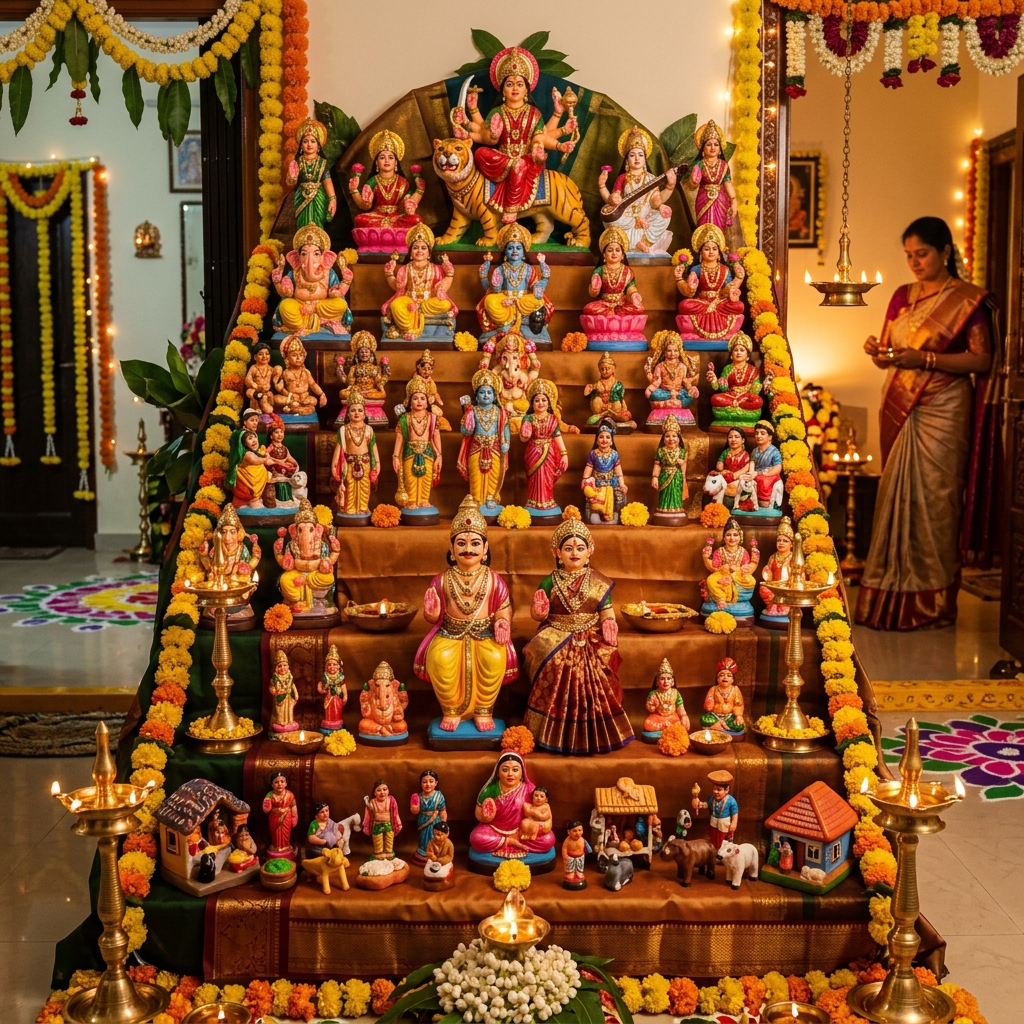
Navratri Golu (called Bommai Kolu in Tamil, Bombe Habba in Kannada, and Bommala Koluvu in Telugu) is a festive display of dolls and figurines. The word 'Kolu' in Tamil refers to a royal court (Durbar) and symbolizes Goddess Durga sitting in her imperial assembly before she set out to battle the buffalo demon Mahishasura.
According to the Devi Mahatmyam, Goddess Durga combined the powers of all the Devas to slay Mahishasura. The Devas surrendered all their divine energies and weapons to her, becoming static doll-like figures. To honor their sacrifice and witness the Goddess's victory, devotees arrange dolls in tiered steps during the nine nights of Navratri.
2. Marapachi Dolls & Lalitha Sahasranamam
No Golu display is complete without the Marapachi Dolls (wooden couple dolls carved out of red sandalwood, teak, or rosewood representing a bride and groom). They represent the cosmic balance of Lord Shiva and Goddess Shakthi. They are passed down through generations from mothers to daughters as a precious bridal treasure.
Every evening, Lalitha Sahasranamam (thousand names of Goddess Lalitha Tripurasundari) is chanted by family members. This chanting creates highly positive vibratory energy inside the household, harmonizing the planetary influences of Venus and Moon, promoting health and domestic bliss.