
1. Puranic Origins & Astrological Significance of Karwa Chauth
Karwa Chauth (also known as Karak Chaturthi) is an ancient Hindu festival observed on the fourth day (Chaturthi) of the waning moon phase (Krishna Paksha) in the sacred lunar month of Kartik (according to Purnimanta calendar) or Ashwin (Amanta calendar).
The word 'Karwa' refers to a traditional small earthen pot used to store water, representing prosperity and emotional containment, while 'Chauth' signifies the fourth day of the lunar fortnight. Astrologically, this fast is dedicated to Lord Shiva, Goddess Parvati, Lord Ganesha, Lord Kartikeya, and Chandradev (the Moon God).
In Vedic Astrology, the Moon represents the Mind (Chitta), emotions, and the matrimonial subconscious (Rasi lord of Cancer). Kartik Krishna Chaturthi occurs when the Moon transits through the auspicious Rohini Nakshatra (ruled by Brahma and loved by Chandradev). Worshipping the Moon on Karwa Chauth balances planetary afflictions of Rahu, Ketu, and Saturn in the 7th house (house of marriage) of both spouses' horoscopes.
2. The Sacred Vrat Katha: Story of Queen Veervati & Draupadi
During the evening group Puja, women gather in circles to listen to the legendary Karwa Chauth Vrat Katha. The scriptures recount two principal legends that define the power of a wife's devotion:
The Legend of Queen Veervati
Veervati was the only sister among seven loving brothers. On her first Karwa Chauth after marriage, she observed a strict Nirjala fast at her parents' house. By evening, Veervati was faint with severe hunger and thirst. Unable to witness their sister's suffering, her brothers lit a fire behind a distant hill and reflected its glow through a mirror, deceiving Veervati into believing that the Moon had risen.
Veervati broke her fast prematurely. The moment she ate the first morsel of food, news arrived that her husband, the King, had suddenly fallen gravely ill and lost his breath. Realizing she had broken her fast fraudulently, Veervati wept and prayed tirelessly to Goddess Parvati throughout the year. On the next Karwa Chauth, she observed the fast with complete strictness. Pleased with her unwavering devotion, Maa Parvati restored her husband to life and health.
Draupadi & Lord Krishna’s Guidance
Another revered story in the Mahabharata relates to Draupadi. When Arjuna went to the Nilgiri hills for penance, the remaining Pandavas faced severe distress. Anxious for her husbands' safety, Draupadi sought Lord Krishna's advice. Krishna recounted how Goddess Parvati had performed the Karwa Chauth fast for Lord Shiva's longevity. Draupadi observed the fast with exact rituals, leading to the Pandavas overcoming all obstacles and reclaiming their kingdom.
3. Step-by-Step Karwa Chauth Vrat Vidhi & Rituals
To ensure your fast yields divine grace and marital bliss, follow this traditional step-by-step ritual routine:
- Brahma Muhurta Sargi (04:30 AM – 05:15 AM): Wake up before sunrise. Bathe and consume the Sargi basket prepared by your mother-in-law (containing dry fruits, fruits, sweets, coconut, mathri, and milk). Take a formal pledge (Sankalpa) for your husband's health.
- Solah Shringaar (Sixteen Adornments): Dress in traditional red, pink, or yellow bridal attire (sari or lehenga). Avoid black or dark blue colors. Adorn yourself with Solah Shringaar — Mehendi (henna), Sindoor, Mangalsutra, Bindi, glass bangles, Bichhiya (toe rings), and Nath.
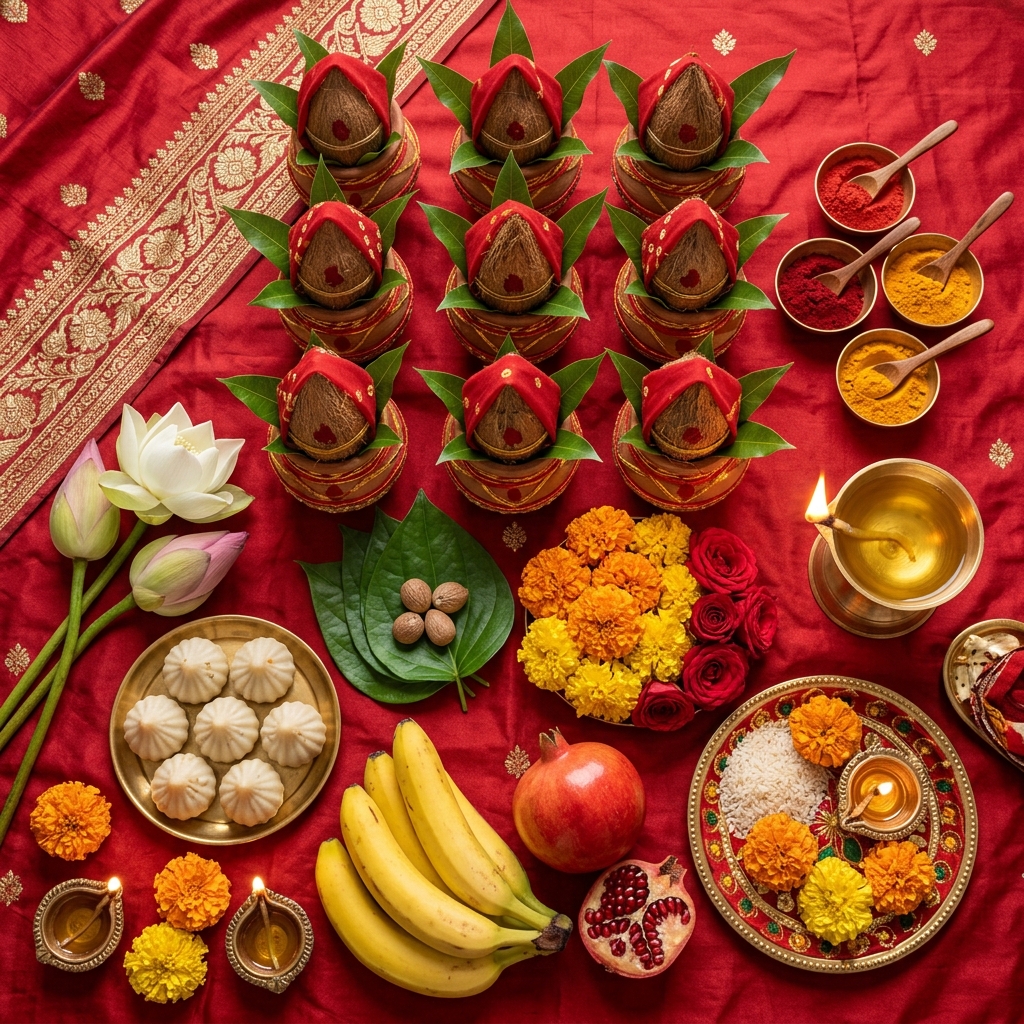
- Evening Group Puja (05:30 PM – 06:45 PM): Clean a raised wooden platform (Chowki) and draw an auspicious Swastika. Place images of Shiva, Parvati, Ganesha, and Kartikeya. Prepare the Karwa pot by decorating it with moli thread, turmericked wheat, and sweets.
- Thali Rotation & Katha: Sit in a circle with fellow fasting women. Rotate your Puja Thalis seven times while chanting traditional Karwa songs ("Veero Kudiye Karwada, Sarv Suhagana Karwada..."). Listen attentively to the Karwa Chauth Vrat Katha.
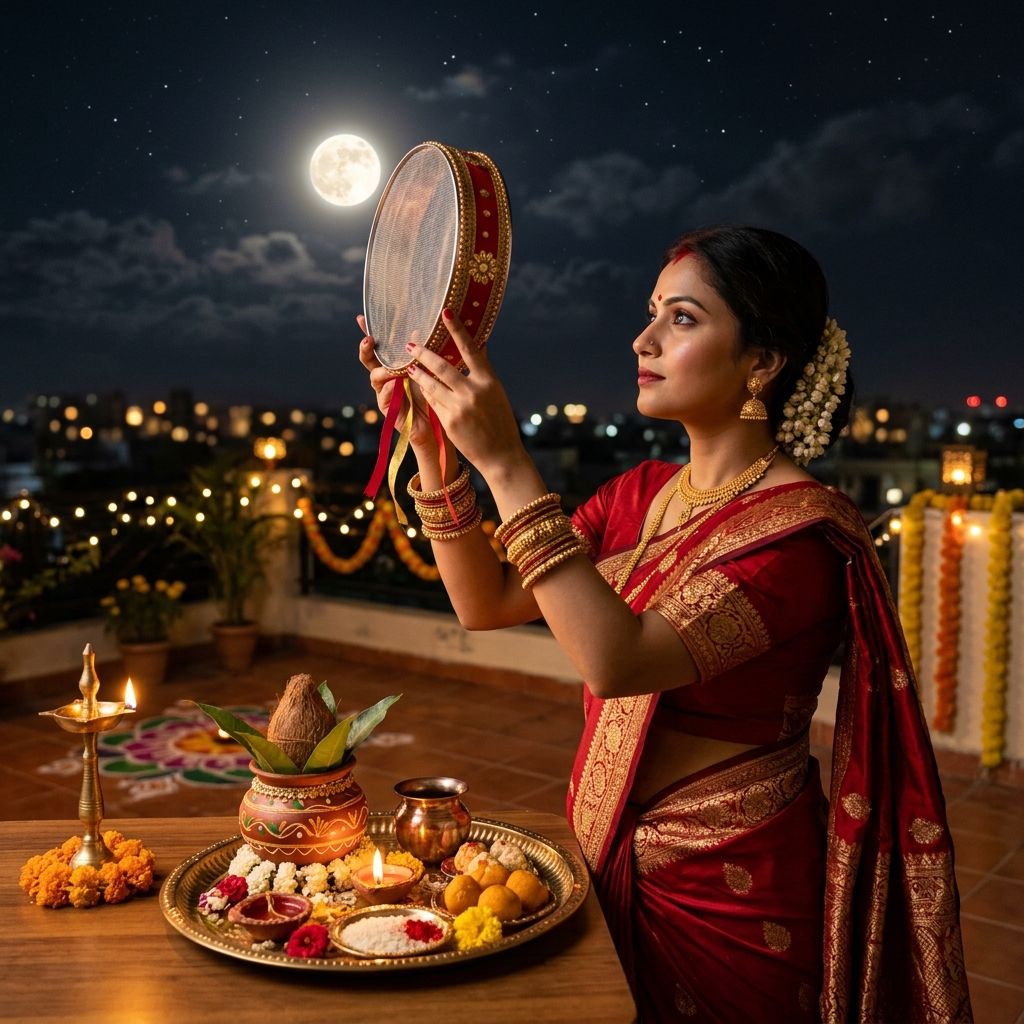
- Moon Sighting & Arghya Ritual: When the Moon rises, light your ghee diya placed on the sieve (chhani). Pour water mixed with milk, sugar, and rice grains from your Karwa pot towards Chandradev as Arghya. Look at the Moon through the sieve, then look at your husband's face.
- Breaking the Fast (Paran): The husband offers the first sip of water from the Karwa and a sweet morsel to his wife, officially breaking the 14-hour fast. Touch the feet of your husband, mother-in-law, and elders for their lifelong blessings.
4. Powerful Karwa Chauth Mantras
नमः शिवायै शर्वाण्यै सौभाग्यं संततिं शुभाम्।
प्रयच्छ भक्तियुक्तानां नारीणां हरवल्लभे॥
"O beloved consort of Lord Shiva, Goddess Parvati! Bestow good fortune, long life for my husband, righteous progeny, and eternal happiness upon devotees who worship you with sincerity."
क्षीरोदार्णवसंभूत अत्रिगोत्रसमुद्भव।
गृहाणारघ्यं मया दत्तं रोहिण्या सहितो मम॥
"O Lord Chandradev, born from the Ocean of Milk and lineage of Sage Atri! Accompanied by Goddess Rohini, accept this water offering (Arghya) and bless our marriage with peace."