
Sharad Navratri 2026 — Complete Guide
Nine sacred nights of Goddess Durga worship. Discover exact Ghatasthapana Muhurat, all nine Navdurga forms, day-wise colours, step-by-step Puja Vidhi, fasting rules, powerful mantras, and zodiac-wise remedies for Sharad Navratri 2026 starting Sunday, October 11, 2026.
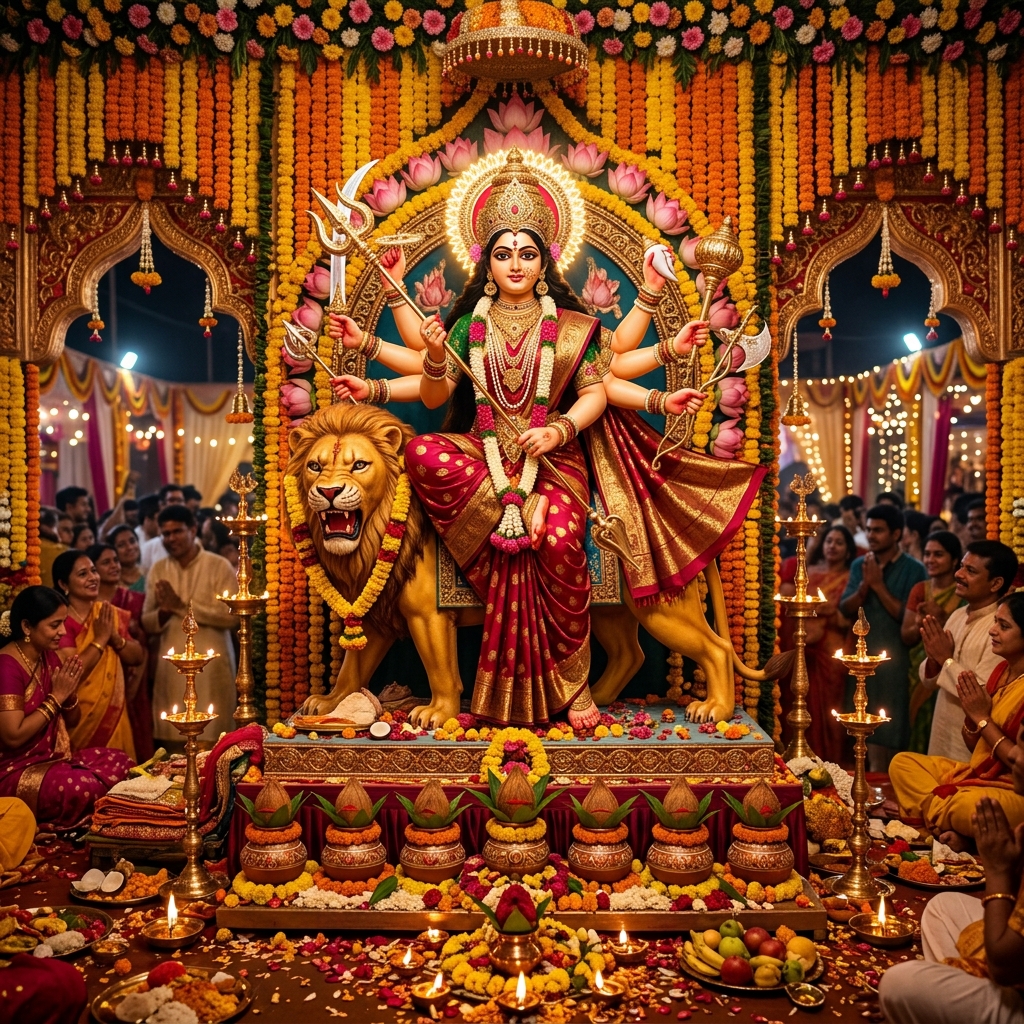
🦁 Maa Durga — Ashwin Shukla Pratipada to Navami, 2026
Starts October 11 · Ends October 19 · Dussehra on October 20
What is Sharad Navratri?
Sharad Navratri (also called Maha Navratri or Ashwin Navratri) is the most celebrated of the four annual Navratris in the Hindu calendar. It falls in the Ashwin month (Shukla Paksha) of the lunar calendar — typically in September or October — and is observed with exceptional devotion across India, from the decorated pandals of West Bengal (Durga Puja) to the Garba dances of Gujarat, the Gollu displays of Tamil Nadu and Andhra Pradesh, and the Kanjak Puja traditions of North India.
The word Navratri is derived from Sanskrit — Nav (nine) + Ratri (nights). Over these nine sacred nights, each of the nine forms of Goddess Durga (collectively called Navdurga) is invoked, worshipped, and celebrated. The festival culminates in Vijayadashami (Dussehra), commemorating Lord Rama's victory over Ravana and Goddess Durga's triumph over the buffalo-demon Mahishasura — both powerful symbols of good vanquishing evil.
Astrologically, Sharad Navratri aligns with a powerful cosmic transition. The Sun has just entered the Virgo–Libra cusp, the autumn equinox energy is fresh, and the Ashwin month is considered particularly potent for spiritual sadhana. Ancient texts like the Devi Mahatmyam (Durga Saptashati) prescribe this period as the ideal window for intensive mantra japa, havan, and Durga upasana to dissolve karma, attract abundance, and receive the Goddess's direct blessings.
⏰ Ghatasthapana Muhurat 2026
Ghatasthapana (Kalash Sthapana) is the ritual act of establishing a sacred earthen or copper Kalash — filled with water, mango leaves, and a coconut — as the divine seat of Goddess Durga for the nine-day period. It must be performed within the auspicious tithi and nakshatra window to maximise spiritual benefit.
🌸 Nine Days, Nine Goddesses
Each day of Navratri is dedicated to a specific form of Goddess Durga. Tap a day to explore the goddess, auspicious colour, recommended offering, and sacred mantra.
Shailaputri
GreyOct 11 (Sun) · PratipadaDaughter of the Himalayas, rides a white bull (Nandi), holds a trident and lotus. She governs the Moon and grants mental peace and grounding energy.
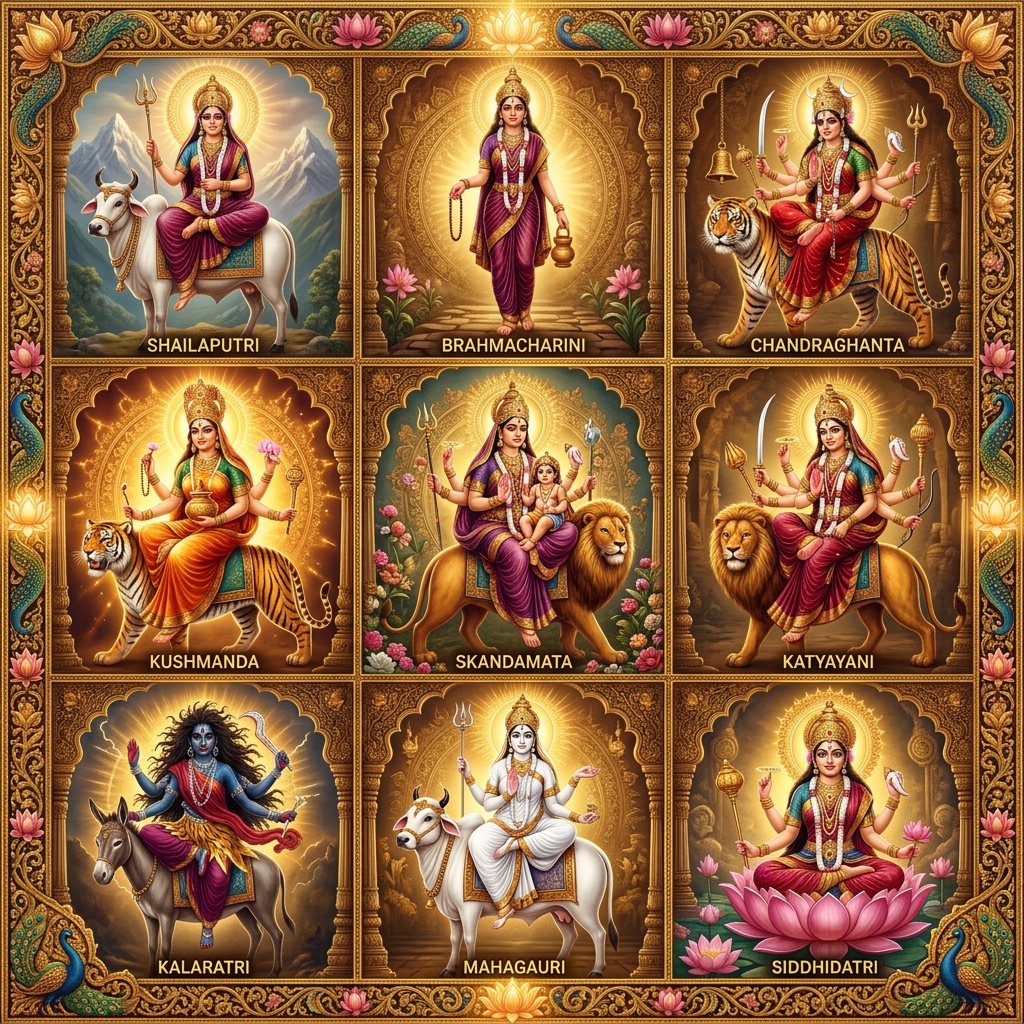
The nine divine forms of Maa Durga (Navdurga) — worshipped sequentially across the nine sacred days of Navratri.
📿 Step-by-Step Navratri Puja Vidhi
Sankalpa (Sacred Resolve)
On the morning of Pratipada (Oct 11), wake before sunrise, bathe, and wear clean clothes (preferably red or grey). Face east or north, hold water in your right palm with a grain of rice and a coin, and take a Sankalpa — a solemn vow to observe Navratri fasting and worship for all nine days with pure intention.
Ghatasthapana (Kalash Installation)
Fill a clay or copper Kalash with Gangajal (or clean water) mixed with coins, turmeric, and a pinch of soil. Insert 5 or 7 mango leaves around the rim. Place a coconut wrapped in red cloth on top and tie a sacred red thread (Mouli) around the Kalash. Place it on a square of clean soil or wheat flour on a wooden chowki (altar). Sow barley seeds (Jau) in the soil around it — these sprouts are a sacred offering at the end of Navratri.
Devi Avahana (Inviting the Goddess)
Light the ghee diya and incense. Offer flowers, roli, kumkum, and chandan to the Kalash as the divine seat of Goddess Durga. Recite the Devi Avahana shloka: "Aagachha tvam Maheshani sthane chaatra sthira bhava / Yavat pujan samaptyaam tavat tvam sannidhim kuru". This invites the Goddess to reside in the Kalash for the full 9 days.
Daily Puja Sequence
Each morning and evening: (1) Light diya and incense. (2) Offer fresh flowers appropriate to the day's goddess. (3) Apply tilak (sindoor, kumkum) to the deity image or Kalash. (4) Offer the day's prescribed bhog (food offering). (5) Chant the day's Navdurga mantra 108 times using a rudraksha mala. (6) Recite Durga Chalisa or Durga Saptashati chapter. (7) Perform Aarti with ghee lamp. (8) Distribute prasad.
Kanya Puja (Kanjak — Ashtami/Navami)
On Ashtami (Oct 18) or Navami (Oct 19), invite 9 young girls (aged 2–10), wash their feet with warm water, apply tilak on their foreheads, and offer them halwa, poori, chana, and red chunri. These girls embody the 9 forms of Navdurga. Seeking their blessings after the puja is considered extremely auspicious.
Navami Havan & Visarjan
On Navami (Oct 19), perform a Durga Havan (sacred fire ritual) using ghee, samagri, and sesame seeds. Complete the final recitation of Durga Saptashati. After Havan, sprinkle holy water from the Kalash around the home. On Vijayadashami (Oct 20), immerse the Kalash water in a river or plant the barley sprouts in your garden as a living blessing.
🛍️ Navratri Puja Samagri Checklist
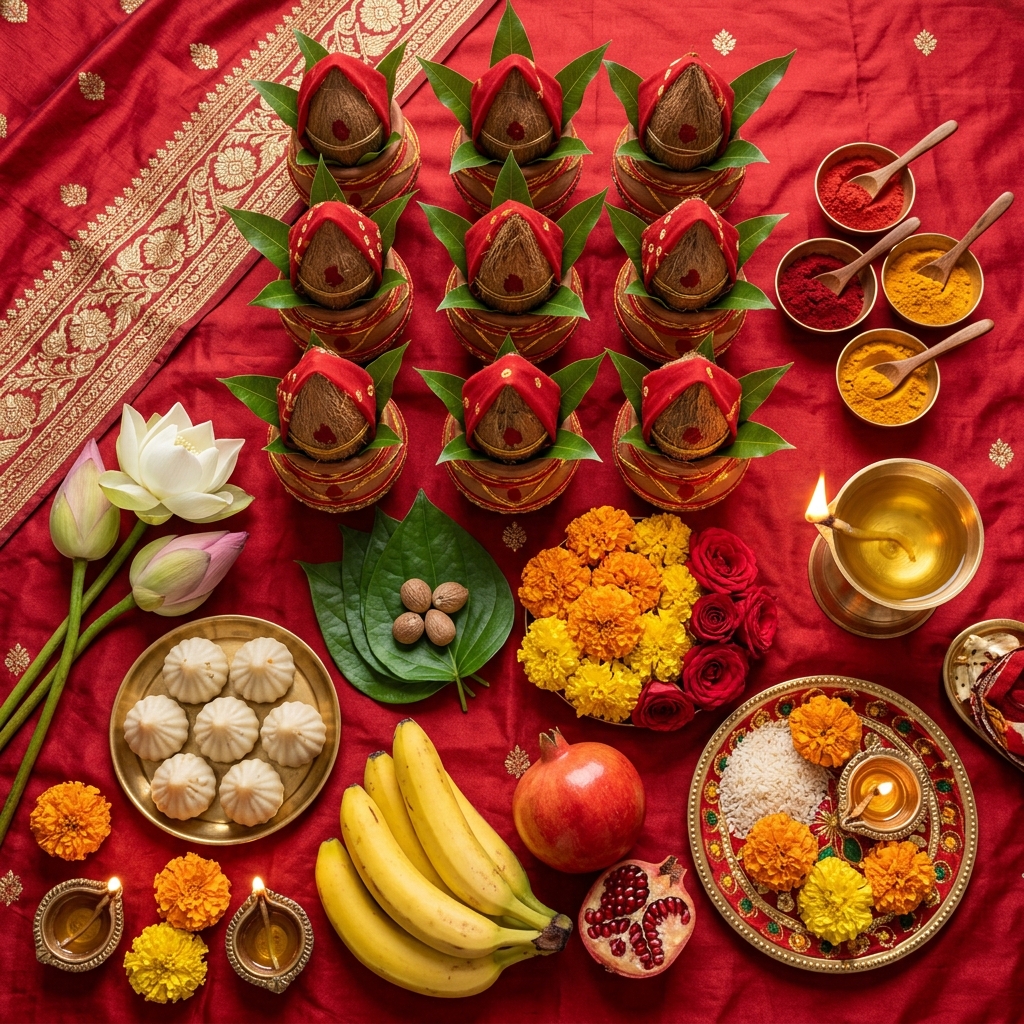
Gather these items before Ghatasthapana on October 11. Items marked with 🪔 should be ready before sunrise on Day 1.
🕉️ Powerful Durga Mantras for Navratri
ॐ ऐं ह्रीं क्लीं चामुण्डायै विच्चे
Om Aim Hrim Klim Chamundayai Vichche
Salutation to Chamunda (the combined form of Chanda and Munda-slaying Durga). Chanting 108 times daily cuts through fear, ignorance, and obstacles.
या देवी सर्वभूतेषु शक्तिरूपेण संस्थिता। नमस्तस्यै नमस्तस्यै नमस्तस्यै नमो नमः॥
Ya Devi Sarvabhuteshu Shakti-rupena Samsthita / Namastasyai Namastasyai Namastasyai Namo Namah
Salutations to the Goddess who is present in all beings in the form of Energy/Power. A core shloka of the Devi Mahatmyam, recited before each chapter.
ॐ ऐं ह्रीं क्लीं ऐं ग्लौं ह्रीं
Om Aim Hrim Klim Aim Glaum Hrim
The nine-syllable Navarna Mantra represents the 9 forms of Durga and is the seed mantra for the entire Durga Saptashati. Chant 108 times during Havan for maximum benefit.
अहं रुद्रेभिर्वसुभिश्चराम्यहमादित्यैरुत विश्वदेवैः। अहं मित्रावरुणोभा बिभर्म्यहमिन्द्राग्नी अहमश्विनोभा॥
Aham Rudrebhir-vasubhish-charamy-aham-adityair-uta vishvadevaiḥ...
The Goddess declares Her omnipresence — "I am the one who travels with the Rudras, Vasus, Adityas, and all gods." Reciting Devi Suktam on Day 7 is especially powerful.
♈ Navratri Remedies for Your Zodiac Sign
Select your Rashi (Moon sign) to see the specific focus area and Navratri remedy recommended for you in 2026.
❓ Frequently Asked Questions
Sharad Navratri 2026 begins on Sunday, October 11, 2026 (Ashwin Shukla Pratipada) and concludes on Tuesday, October 19, 2026 (Navami). Dussehra / Vijayadashami is celebrated on Wednesday, October 20, 2026.
Ghatasthapana (Kalash Sthapana) is the ritual installation of a sacred pot (Kalash) filled with water, mango leaves, and topped with a coconut — symbolizing the divine presence of Goddess Durga. It marks the official start of Navratri. The most auspicious Muhurat in 2026 is from 06:17 AM to 07:43 AM IST on October 11. Avoid the Chitra Nakshatra's inauspicious pada during this time.
Navratri fasting permits: fruits, dry fruits, dairy products (milk, curd, paneer, ghee), sendha namak (rock salt), sama ke chawal (barnyard millet), kuttu ka atta (buckwheat flour), singhare ka atta (water chestnut flour), and root vegetables like potato, sweet potato, and arbi. Strictly avoid: wheat, rice, regular salt, onion, garlic, non-vegetarian food, and alcohol.
Navratri literally means "nine nights" (Nav = nine, Ratri = night). The festival spans 9 days of worship, one form of Goddess Durga per day. In 2026, it runs from October 11 (Day 1 – Shailaputri) to October 19 (Day 9 – Siddhidatri). The 10th day is Dussehra.
Kanya Puja (or Kanjak) is the ritual of worshipping nine pre-pubescent girls (aged 2–10) as living embodiments of the nine Navdurga forms. Their feet are washed, tilak applied on their forehead, and they are offered halwa, poori, chana, and red chunni. It is traditionally performed on Ashtami (Oct 18) or Navami (Oct 19), before breaking the fast.
Yes. Durga Saptashati (also called Chandi Path or Devi Mahatmyam) is a sacred text of 700 slokas divided into 13 chapters, narrating the battles of Goddess Durga against Mahishasura and other demons. Reciting all 700 verses across the 9 days (approx. 78 slokas/day) is considered the most complete form of Navratri worship.
Each of the 9 days is associated with a specific colour that reflects the energy and shakti of the Navdurga form worshipped that day. Wearing the colour amplifies your connection to the Goddess's divine vibration. For 2026: Day 1 Grey, Day 2 Orange, Day 3 White, Day 4 Red, Day 5 Royal Blue, Day 6 Yellow, Day 7 Green, Day 8 Peacock Green, Day 9 Purple.