


The month of Sawan (Shravan) holds an incomparable sanctuary of devotion, renewal, and cosmic grace in the Hindu calendar. Dedicated entirely to Lord Shiva (Mahadev), Sawan marks the Fifth Month of the Hindu lunar year, coinciding with the arrival of monsoon rains across the Indian subcontinent. As celestial clouds quench the earth's thirst, millions of devotees embark on fasting rituals (Sawan Somwar Vrat), undertake foot pilgrimages (Kanwar Yatra), and visit sacred Shiva temples to seek health, prosperity, and spiritual liberation.
In Vedic cosmic philosophy, Sawan is not merely a seasonal transition; it is an energetically heightened portal. During this period, planetary alignments—especially the Moon (Chandra) transiting through Shravana Nakshatra—amplify devotion, mental clarity, and karmic cleansing. Whether you are observing your first Sawan Somwar fast or planning a pilgrimage to ancient Jyotirlinga shrines, understanding the deep scriptural importance, exact dates, and fasting guidelines will elevate your spiritual journey.
1. The Legend & Cosmic Significance of Sawan
The spiritual sanctity of Sawan is deeply tied to the ancient Vedic puranic legend of Samudra Manthan (the churning of the cosmic ocean). According to scripture, when the Devas (gods) and Asuras (demons) churned the primeval ocean, fourteen divine treasures emerged. However, before the nectar of immortality (Amrit) surfaced, a deadly, scorching poison known as Halahala threatened to consume all creation.
As the universe quaked in agony, Lord Shiva intervened out of infinite compassion. He gathered the lethal poison and drank it, holding it in His throat rather than swallowing it. The immense heat turned His neck blue, earning Him the divine name Neelkanth ("The Blue-Throated Lord"). To soothe the burning sensation in Mahadev's throat, the Devas continuously poured holy water and offered cool Bilva (Bel) leaves. This primordial act of offering water to cool Mahadev gave birth to the sacred tradition of Jal Abhishekam during Sawan.
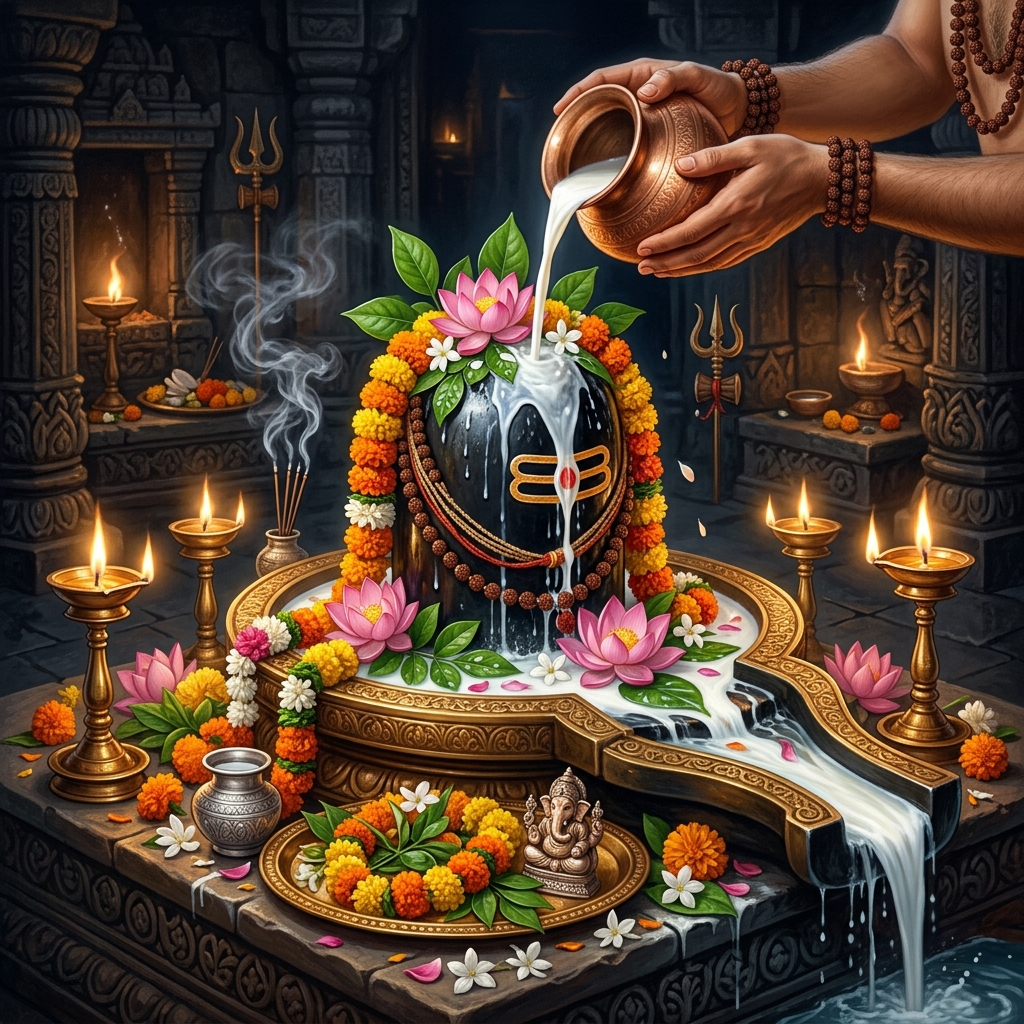
✨ Sacred Jal Abhishekam: Offering holy Ganga water, milk, and Bel Patra to the Shivling during Sawan Somwar.
2. Sawan 2026 Key Dates & Sawan Somwar Calendar
In 2026, Sawan observed according to the North Indian Purnimanta calendar begins in late July and spans through August. Mondays (Somwar) falling in this holy month are considered exceptionally auspicious for observing fasts (Sawan Somwar Vrat).
| Sawan Event / Fast | Date (2026) | Spiritual Significance |
|---|---|---|
| Sawan Month Commences (North India) | July 29, 2026 (Wednesday) | Beginning of the holy Shravan month for Rajasthan, UP, MP, Bihar, Punjab. |
| First Sawan Somwar (1st Fast) | August 3, 2026 (Monday) | First Monday fast for career clarity, inner peace, and Mahadev's grace. |
| Second Sawan Somwar (2nd Fast) | August 10, 2026 (Monday) | Dedicated to mental harmony and balancing Moon (Chandra) planetary energy. |
| Sawan Shivratri | August 11, 2026 (Tuesday) | Krishna Paksha Chaturdashi; night-long Abhishekam and Kanwar Jal offering. |
| Third Sawan Somwar (3rd Fast) | August 17, 2026 (Monday) | Auspicious for marital happiness, finding a suitable life partner, and health. |
| Fourth Sawan Somwar (4th Fast) | August 24, 2026 (Monday) | Final Sawan Monday fast for completing Vrat pledges and spiritual abundance. |
| Sawan Purnima & Raksha Bandhan | August 28, 2026 (Friday) | Full moon day concluding Sawan; celebration of Raksha Bandhan & Gayatri Jayanti. |
3. Essential Fasting Rules & Ritual Vidhi
Observing Sawan Somwar Vrat is believed to fulfill noble desires, remove karmic obstacles, and grant deep emotional equilibrium. Follow these authentic Vedic guidelines during your fast:
A. Morning Puja & Abhishekam Routine
- Brahma Muhurta Bath: Wake up early during Brahma Muhurta (around 4:00 AM – 5:00 AM), bathe, and wear clean white or light green traditional attire.
- Panchamrit Abhishekam: Offer milk, curd, honey, cow ghee, and sugar to the Shivling, followed by clean holy Ganga Jal.
- Sacred Offerings: Offer fresh, intact Bel Patra (tri-fold leaves), Dhatura flowers, Shami leaves, sandal paste (Chandan), and Bhasma (sacred ash).
- Mantra Chanting: Recite the Maha Mrityunjaya Mantra or chant "Om Namah Shivaya" 108 times using a Rudraksha rosary.
B. Fasting Diet & Conduct Rules
- Satvik Diet: Eat fruits, milk, Sabudana, Kuttu (buckwheat flour), and makhana (fox nuts). Use Sendha Namak (rock salt) instead of regular table salt.
- Items to Avoid: Strictly refrain from non-vegetarian food, alcohol, tobacco, onion, garlic, turmeric (Haldi is avoided on Shivling), and processed food.
- Maintain Brahmacharya: Practice purity of thought, speech, and action; avoid anger, harsh words, or negative gossip throughout the day.
4. Most Popular & Sacred Shiva Mandirs to Visit During Sawan
Visiting a revered Shiva temple or one of the 12 sacred Jyotirlinga shrines during Sawan is considered a transformative spiritual milestone. Here are the top holy Shiva mandirs in India that witness immense divine grace during this month:

✨ Divine Glory: Ancient Jyotirlinga Shiva mandir glowing with lamps and bustling with Kanwar pilgrims during Sawan.
1. Kashi Vishwanath Temple (Varanasi, Uttar Pradesh)
Located along the sacred banks of the River Ganges in Varanasi, Kashi Vishwanath is one of the most revered Jyotirlinga shrines in existence. Millions of Kanwariyas bring fresh Ganga Jal from Sultanganj and Haridwar to perform Jalabhishek here during Sawan. The recently expanded Kashi Vishwanath Corridor glows with unparalleled spiritual energy during Sawan Somwar.
2. Mahakaleshwar Temple (Ujjain, Madhya Pradesh)
Mahakaleshwar is unique as the only south-facing (Dakshinmukhi) Jyotirlinga, symbolizing Lord Shiva as the Master of Time and Death (Kala). The world-renowned Bhasma Aarti performed at 4:00 AM with fresh sacred ash draws thousands of devotees during Sawan. During Sawan Somwar, the grand Sawari (procession) of Lord Mahakal moves through the ancient streets of Ujjain.
3. Kedarnath Temple (Rudraprayag, Uttarakhand)
Nestled at an altitude of 3,583 meters amidst the majestic snow-clad Himalayan peaks, Kedarnath is part of both the 12 Jyotirlingas and the Char Dham circuit. Sawan brings lush greenery and misty waterfalls to the Garhwal Himalayas. Pilgrims trek up to Kedarnath to pray to the conical rock form of Mahadev for spiritual liberation.
4. Baidyanath Dham (Deoghar, Jharkhand)
Deoghar witnesses the world's longest unorganized human foot procession during Sawan. Over 5 million saffron-clad Kanwariyas walk barefoot for 105 kilometers carrying Ganga Jal from Sultanganj to offer Abhishekam to Lord Baidyanath (the divine healer). It is believed that worshiping here cures chronic illnesses and restores vital energy.
5. Somnath Temple (Veraval, Gujarat)
Situated on the western coast of Gujarat where the Arabian Sea washes its foundations, Somnath is recognized as the First Jyotirlinga shrine. Built by Moon God (Chandra Dev) himself to break a curse of waning, Somnath holds immense astrological significance. Worshiping here during Sawan balances Moon-related afflictions, anxiety, and emotional turbulence.
6. Trimbakeshwar Temple (Nashik, Maharashtra)
Situated at the source of the holy River Godavari near Brahmagiri hills, Trimbakeshwar is extraordinary because its Linga embodies the Trinity—Lord Brahma, Lord Vishnu, and Lord Shiva. It is the prime pilgrimage center for performing Kalsarp Dosha Shanti and Pitra Dosh Nivaran Pujas during the holy Sawan month.
5. Astrological Benefits of Sawan Worship
From a Vedic astrology perspective, Lord Shiva is the supreme controller of time (Kala), the Moon (Chandra), and Rahu/Ketu nodes. Worshiping Mahadev during Sawan offers profound planetary remedies:
- Moon (Chandra) Strengthening: Since Shiva wears the crescent Moon on His head (Chandrashekhara), Sawan fasts cure mental stress, mood fluctuations, depression, and water-related health issues.
- Saturn (Shani) & Sade Sati Relief: Lord Shiva is the Guru of Lord Saturn (Shani Dev). Performing Jalabhishek with black sesame seeds (Til) on Sawan Saturdays or Mondays mitigates the harsh effects of Sade Sati and Dhaiya.
- Kalsarp & Rahu Dosha Neutralization: Offering Bel Patra and Dhatura to the Shivling neutralizes Rahu-Ketu afflictions and removes unexpected career blockages.
6. Conclusion: Embrace the Divine Grace of Sawan
Sawan is a divine invitation to cleanse your mind, reset your health, and immerse yourself in the boundless grace of Lord Shiva. Whether you perform a simple daily Jalabhishek at your local mandir or travel to a sacred Jyotirlinga, let your heart resonate with pure devotion and surrender to Mahadev.
Check Your Sawan 2026 Puja Muhurtas & Kundli Insights
Calculate your precise birth chart, explore your active Vimshottari Dasha, and get AI-powered personalized Sawan Puja remedies tailored to your planetary placements on Astrologiq.ai.